
The Shoes We Leave Outside: A childhood ritual, a traveling saint and the children who need us now
A call to help and donate to mother-child charities helping the displaced


Wayfind
When I was a kid, my favorite stops on our drives down south from Cleveland were at my dad’s friend Larry’s house. It was a small, very old farmhouse tucked into the hills that drop toward the Ohio River—quiet, a little ramshackle and full of life. My father and Larry had worked together as school custodians, and we visited often. Larry’s wife was endlessly kind; she barely blinked when my mother arrived after the four-hour drive and announced, “Alice, the kids have lice.”
Larry’s adult children were gentle souls, and one of his younger sons used to tuck my sister Colleen and me into bed with improvised stories about the Care Bears.
The house itself was a magical concoction of centuries-old bones, salvaged materials (I’m pretty sure an old camper was reborn as a bedroom), and 1980s country décor. For my sister and me it became an expansive playground: the feisty rooster, the rowdy dogs, jeep rides into the woods, and the thrill of exploring abandoned houses in the Ohio River Valley.
But my favorite memory from Larry’s comes from one winter morning, when I woke up on December 6th to find a few small presents tucked into my shoes.
Impact
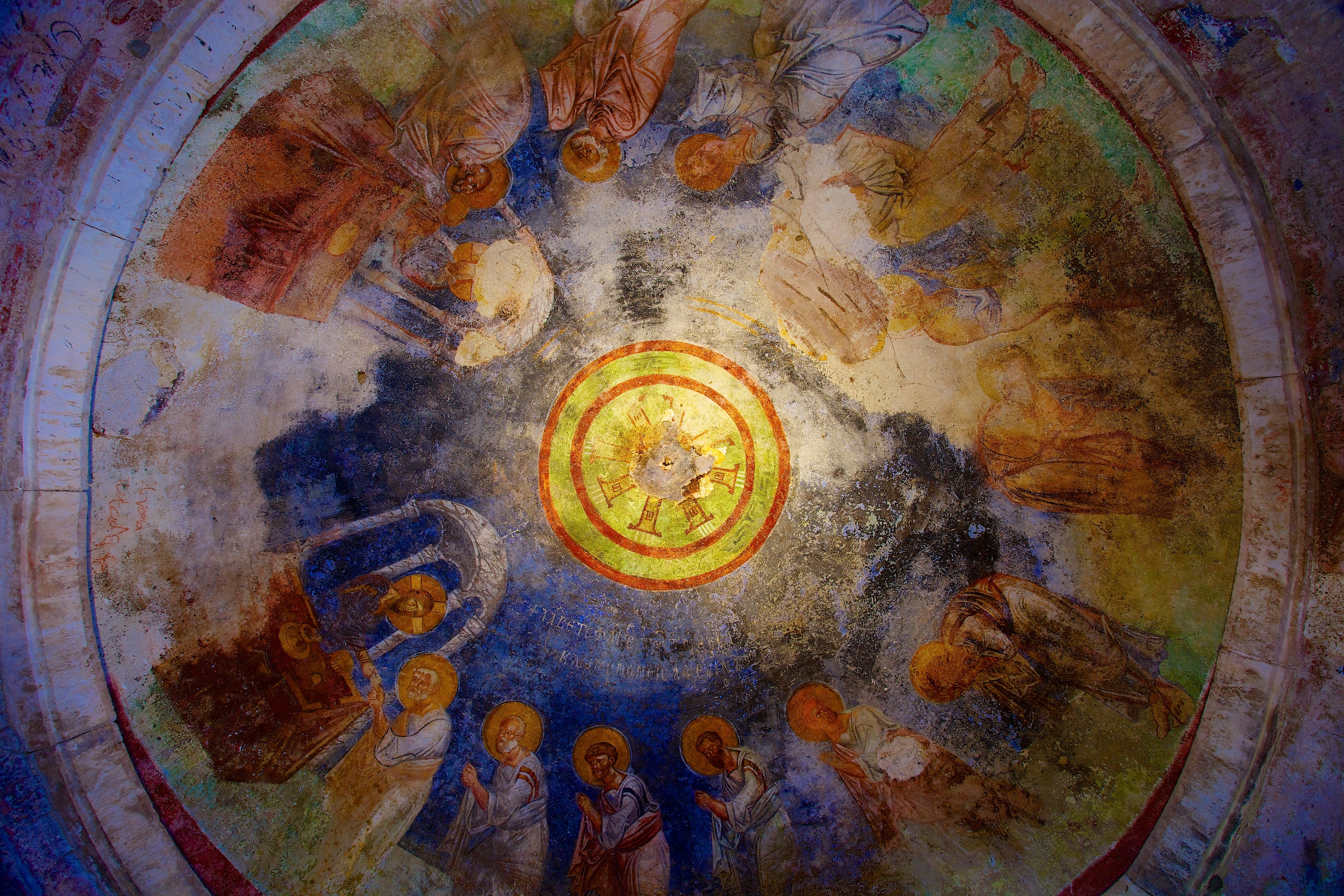
My mother and father explained that it was St. Nicholas Day—the feast of the old patron saint of children. Over centuries of Christianization, canonization, and eventually American commercial mythmaking, he would be transformed into the figure we now call Santa Claus. But before all that, tradition held that he moved through the night in disguise, leaving small gifts for children—especially those who were poor or vulnerable. He also became a patron saint of travelers and sailors, though that connection meant little to me as a Romani child. To me, the gifts that appeared beside the shoes I’d worn dancing in the mud earlier that day, as ice crystals formed on the ground, felt like pure magic.
As an adult, I’ve come to see that, amidst the commemoration, canonization, and colonization of St. Nicholas, the simple act of leaving out shoes on the night of December 5th has always felt like a moment of resistance. It is the memory of a real man—not seasonal merchandise—who chose to use his power to be generous and help others. Like the three wise men of the nativity, it is a practice that reminds the world that sometimes help and knowledge come from outside, from travelers. It is a memory of generations, and a hope that I might one day leave gifts for my own children by their mucky shoes.
My whole life has become research into movement: how bodies step through history, how impact shapes us, how the floor remembers what we try to forget.
Shoes are not just shoes.
Shoes are the point where body meets world, where force becomes story.
So when I think about that Saint Nicholas ritual now—leaving my shoes out, offering the place where my body touches the earth—I understand it differently. It was a ritual of trust. Of vulnerability. Of movement blessed, because the road ahead contains many dangers.
Fall
But today, as I think of that ritual, my heart breaks.
Children everywhere are suffering things no child should ever have to endure. The shoe outside the door becomes something else: a symbol of a child who had to run. A child who lost their home. A child who will never return.
Please join me in donating to the Palestine Children’s Relief Fund, Chirikli, or any mother–child charity you choose, because the world keeps failing its children, and these organizations try to do for children what Saint Nicholas once did: offer protection, care, and possibility.
When I was nine years old, we watched All Dogs Go to Heaven in school—a film about loyalty, courage, kindness. But the reality is that while we watched that story, many children in the world were living through horrors. Some of the children who gave us our sense of bravery, compassion, and empathy—children whose stories we didn’t know—were suffering unimaginable things. The world often asks children to carry the impact of violence that adults create. And children always feel it first.
But when I think of Saint Nicholas now—the traveling protector of children—I cannot ignore the truth that today the traveler is something else entirely. Amidst the horror we are seeing against children in Palestine, Ukraine, Congo, Sudan—and Romani and Sinti families facing oppression all over the world—is a painful truth: this nightmare is exported.
The traveler moving across borders is war.
The traveler settling into homelands is colonialism.
The traveler entering children’s bedrooms, classrooms, and futures is genocide—carried out by powerful men who call their orders “security,” “policy,” “operation,” while they harm the very children they claim to defend.
These forces travel farther and faster than any saint ever did. They arrive in the night just the same—but instead of gifts, they leave ruin.
I think of the little girl who voiced All Dogs Go to Heaven, killed at ten after years of abuse. Heather O’Rourke, “Carol Anne,” gone at twelve. Children whose magic shaped my understanding of courage and empathy, even as adults failed them completely.
Build
If Saint Nicholas once walked from door to door offering protection and care, then the work is ours now. There are just not enough travelers of peace.
We must become him not in legend but in our choices.
It is time for new action that might one day become a new myth of hope for the season.
I remember the little girl actress.....Juith Barsi her family was from Hungary her father killed her at 10 and Mama in 1988